



Galapagos Land-Based Tours: Complete Guide to Exploring the Islands by Land
Flexible, Comfortable, and Immersive Alternatives to Cruises—Discover the Galapagos at Your Own PaceTable of Contents
You don’t need to sleep on a boat to experience the Galapagos. On a land-based tour, you stay in hotels on the inhabited islands and explore the archipelago through guided day trips: snorkeling with sea lions, hiking volcanoes, visiting giant tortoises in the highlands and taking boat excursions to uninhabited islands. Every evening you return to solid ground, a comfortable room and the restaurants and streets of a real island town.
Land-based tours are a great fit for travelers who get seasick, families with children, people who want more flexibility or more time in one place, and anyone who wants to combine nature with local culture. In this guide we explain how land-based tours work, how they compare with a cruise, the best islands to stay on, sample itineraries from 4 to 14 days and the best time to go.

What Exactly is a Galapagos Islands Land-Based Tour?
A Galapagos land-based tour is a trip where you sleep in hotels instead of on a cruise ship. You visit the islands on guided land excursions and daily boat trips, led by licensed Galapagos National Park naturalist guides. There are two main types:
| Hotel-based tour | Island-hopping tour | |
|---|---|---|
| How it works | You stay in one hotel, usually on Santa Cruz, and take day trips from there | You move between two or three islands by ferry or small plane and stay in a different hotel on each |
| Best for | Shorter trips, families, travelers who don’t want to pack and unpack | Seeing more of the archipelago, longer trips |
| Islands | Santa Cruz plus day trips to nearby islands | Usually Santa Cruz, Isabela and San Cristóbal, sometimes Floreana |
| GreenGo tours | Hotel-based tours | Island-hopping tours |
Only four islands are inhabited and have hotels: Santa Cruz, San Cristóbal, Isabela and Floreana. Every other island is part of the Galapagos National Park and can only be visited with a licensed guide on a day trip or a cruise. To learn more about where you can stay, read Can you stay on the Galapagos Islands?
Why Choose a Galapagos Islands Land-Based Tour?
A land-based tour lets you explore the Galapagos at your own pace, with more comfort and flexibility than a cruise. Here are the main reasons travelers choose one:
- More freedom: you can mix guided excursions with free time, extend your stay on your favorite island and choose activities day by day, from snorkeling in the morning to visiting a local market in the afternoon.
- A wide range of hotels: from simple family-run guesthouses to boutique hotels and luxury eco-lodges.
- No nights at sea: you sleep on stable ground every night.
- Local culture: you’ll eat at local restaurants, walk the town promenades and meet the people who live on the islands.
- Easy to combine: you can add a few days on land before or after a cruise, or design a private tour around your interests.

Land-based tours for seasick travelers
If you get seasick, a land-based tour is the most comfortable way to see the Galapagos. On a cruise, the boat sails at night between islands; on land, you sleep in a hotel. You’ll still take boat rides on day trips and ferries, which usually last about 2 hours, but you can choose the shortest routes and the calmest season (January to May). Our guide to Galapagos seasickness has more tips.
Land-based tours for families
For families, a land-based tour offers more space, more flexible schedules and hotels with family rooms and pools. Children can rest in the afternoon, eat familiar food and play on beaches like Tortuga Bay, while parents choose excursions that suit everyone’s age and energy. A private guide can adapt each day to your family. See also our tips for traveling to the Galapagos with children.
Luxury land-based tours
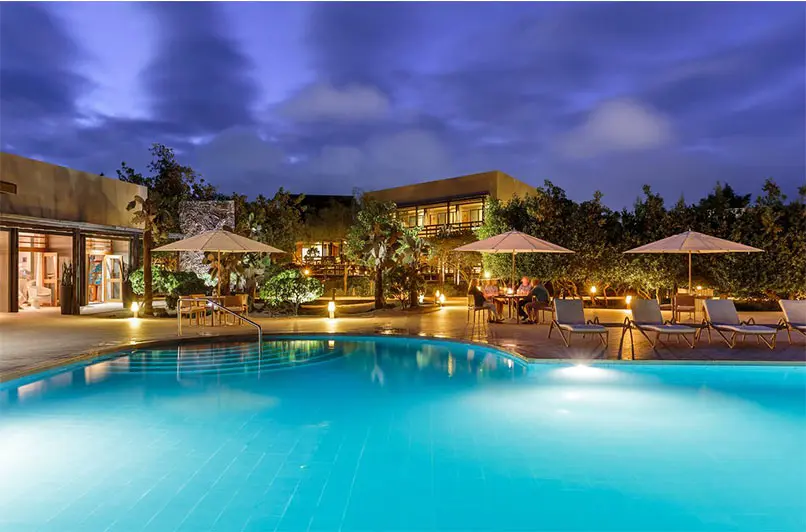
A land-based trip can be just as comfortable as a luxury cruise. Luxury hotels and eco-lodges on Santa Cruz offer spacious rooms, pools, fine dining and private excursions, and you have more space and privacy than in a ship’s cabin. A good example is our Galapagos Habitat Hotel program, a luxury hotel on Santa Cruz with guided day trips to the nearby islands. If you prefer to travel by sea in luxury, compare it with our guide to Galapagos luxury cruises.
Galapagos Cruise vs. Land-Based Tour
Both are excellent ways to see the Galapagos. The right choice depends on your travel style, budget and how much time you have.
| Land-based tour | Cruise | |
|---|---|---|
| Where you sleep | Hotels on Santa Cruz, San Cristóbal, Isabela or Floreana | A cabin on a yacht, catamaran or small ship |
| Islands you can reach | The inhabited islands and the uninhabited islands within day-trip range (North Seymour, Bartolomé, South Plaza, Santa Fe and others) | All of the above plus remote islands such as Genovesa, Fernandina and western Isabela |
| Travel time | Ferries of about 2 hours between islands, during the day | The boat sails mostly at night, so you wake up at a new island |
| Seasickness | Less exposure; you sleep on land | More time at sea, including overnight |
| Flexibility | High; you can change pace, add free days and choose activities | Fixed itinerary set by the Galapagos National Park |
| Culture | Time in town, local restaurants and markets | Mostly on board and at visitor sites |
| Best for | Families, seasick travelers, flexible or longer trips, travelers who want variety in hotels | Seeing the most wildlife and the most remote islands in the least time |
Learn more about the different types of Galapagos cruises or browse our Galapagos cruises.
The best of both: combine a cruise and a land-based tour
Can’t decide? Combine them. Start or end your trip with a cruise to reach remote islands like Genovesa or Fernandina, then spend a few days on land to enjoy the towns, beaches and highlands at your own pace. Our Santa Cruz, Isabela and San Cristóbal extensions are designed to be added to a cruise.
Choosing the Right Galapagos Land-Based Tour
With so many options, it helps to decide on a few things first:
- Duration: land-based tours usually last from 4 to 10 days, and you can extend them to two weeks or more. Plan at least 5 days if you want to see more than one island.
- Islands: Santa Cruz is the best base for day trips, Isabela for volcanoes and a relaxed atmosphere, San Cristóbal for sea lions and beaches, and Floreana for history and quiet. See the section below.
- Activities: most tours include hiking, snorkeling and boat day trips; some add kayaking, biking, surfing or diving.
- Hotel level: from standard and superior hotels to first-class and luxury properties. Browse our tours with standard and superior hotels or with first-class and luxury hotels.
- Group or private: join small groups on day trips, or choose a private guide for a fully tailored trip.
For a full breakdown of what a trip costs, including flights, park fees and tours, see our Galapagos trip cost guide.
Best Islands to Stay On for a Land-Based Tour
Santa Cruz
Santa Cruz is the heart of the archipelago and the best base for a first trip. Its town, Puerto Ayora, has the widest choice of hotels and restaurants, and it’s the departure point for day trips to North Seymour, Bartolomé, South Plaza and Santa Fe. On the island itself, you can walk to Tortuga Bay, swim at Las Grietas, see wild giant tortoises at El Chato in the highlands and visit the Charles Darwin Research Station. Read more in our Puerto Ayora travel guide.
Isabela
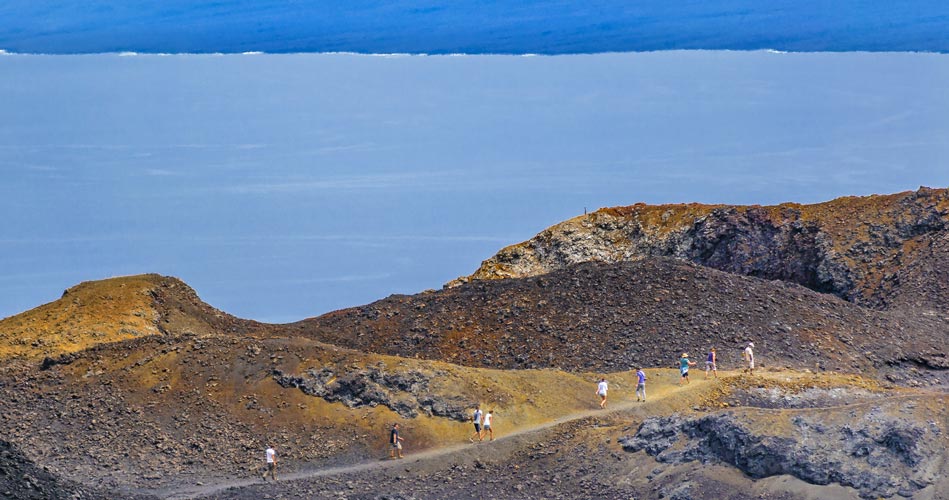
Isabela is the largest island and has a small, relaxed town, Puerto Villamil, with a long white beach. From here you can hike to the huge crater of Sierra Negra Volcano, snorkel with sea lions and white-tipped reef sharks at Las Tintoreras, visit the tortoise breeding center and take a boat trip to the lava arches of Los Túneles.
San Cristóbal
San Cristóbal is home to the islands’ capital, Puerto Baquerizo Moreno, where sea lions sleep on the town’s beaches and benches. Highlights include the Interpretation Center, the hike to Frigatebird Hill, the Galapaguera de Cerro Colorado tortoise center and a day trip to Kicker Rock, one of the best snorkeling sites in the islands. San Cristóbal also has its own airport, so you can fly in or out here.
Floreana
Floreana is the least developed of the inhabited islands, with only a few small places to stay. It’s known for its quiet beaches, its pirate and settler history and its highlands, where tortoises are being returned to the island. Most visitors see Floreana on a day trip from Santa Cruz. Read our Floreana Island travel guide.
Best Galapagos Land-Based Itineraries
All ferries between islands depart from Santa Cruz, so most itineraries use Santa Cruz as their hub. These sample itineraries are based on our most popular Galapagos land-based tours, and all of them can be adapted to your dates and interests.
4 to 5 days: Santa Cruz highlights
Ideal for a short trip or as an add-on to a cruise. Stay on Santa Cruz and combine the highlands, the giant tortoises and Tortuga Bay with one or two boat day trips to islands such as North Seymour, Bartolomé or South Plaza. See our Galapagos Getaway (4 days) and Galapagos Exploration (5 days), or browse all 4- to 6-day tours.
6 days: San Cristóbal, Santa Cruz and Isabela
- Day 1: fly to San Cristóbal, visit the Interpretation Center and hike to Frigatebird Hill.
- Day 2: boat day trip to Kicker Rock to snorkel.
- Day 3: ferry to Santa Cruz; visit the highlands and the Charles Darwin Research Station.
- Day 4: ferry to Isabela and afternoon visits around Puerto Villamil.
- Day 5: Las Tintoreras and the hike to Sierra Negra Volcano.
- Day 6: return to Santa Cruz and fly home from Baltra.
This route follows our Galapagos Discovery (6 days) tour.
8 days: the three main islands at a relaxed pace
With a week, you can spend two or three nights on each of San Cristóbal, Santa Cruz and Isabela, adding more boat day trips (Kicker Rock, Bartolomé or South Plaza) and free time to enjoy the beaches. See our Galapagos Adventure (8 days) and 8-day Galapagos land adventure.
10 to 14 days: the complete Galapagos
Two weeks let you see the Galapagos in depth: all three main islands, a day trip to Floreana, several snorkeling and hiking excursions, and time to relax in between. Start with our Galapagos Expedition (10 days) and add one of our island extensions, or combine a land-based tour with a cruise to reach the remote islands too. See all our tours of 7 days and over.

The Galapagos Islands Arrival
Every Galapagos trip starts with a flight from Quito or Guayaquil on mainland Ecuador to one of two airports:
- Baltra Airport (GPS): on a small island just north of Santa Cruz, connected by a short bus ride and a ferry crossing to Santa Cruz. Most land-based tours start here.
- San Cristóbal Airport (SCY): right next to Puerto Baquerizo Moreno.
Before your flight, you’ll buy a Transit Control Card at the airport in Quito or Guayaquil, and on arrival you’ll pay the Galapagos National Park entrance fee. Your luggage is inspected to keep foreign plants and animals out of the islands. Our team takes care of transfers and logistics, and your guide will meet you on arrival. For flight options, see our guide on how to get to the Galapagos Islands.
Your first day: settle in or start exploring
If you arrive in the morning, you can head straight to the Santa Cruz highlands to see giant tortoises on the way to Puerto Ayora, then check in to your hotel. If you’d rather take it easy, settle in, walk along the waterfront and enjoy your first sunset over the bay.
The Best Time of The Year for a Land-Based Tour in the Galapagos
The Galapagos are a year-round destination, and land-based tours run in every month. The two seasons offer different experiences:
- Warm season (about December to May): sunny days, short showers, warm water (around 25°C / 77°F from February to April) and the calmest seas, which makes ferry rides and boat day trips more comfortable. Great for snorkeling and beach time.
- Cool season (about June to November): cooler, often overcast days that are ideal for hiking, cooler water (around 21–23°C / 70–74°F, so bring or rent a wetsuit) and very active marine life, with sea lion pups and nesting seabirds. Seas are roughest from August to October.
If you are prone to seasickness, the warm season is the most comfortable time for a land-based trip. For a month-by-month breakdown of temperatures and wildlife, see our Galapagos weather by month guide.
Culture and Local Life in the Galapagos
The People of the Galapagos
The Galapagos have about 28,600 residents, according to Ecuador’s 2022 census. Most live on Santa Cruz (about 17,200), followed by San Cristóbal (about 8,300) and Isabela (about 3,000), with a small community on Floreana. Many residents moved to the islands from mainland Ecuador and work in tourism, fishing, conservation and public services. Strict residency and environmental rules help protect the islands.
Food and restaurants
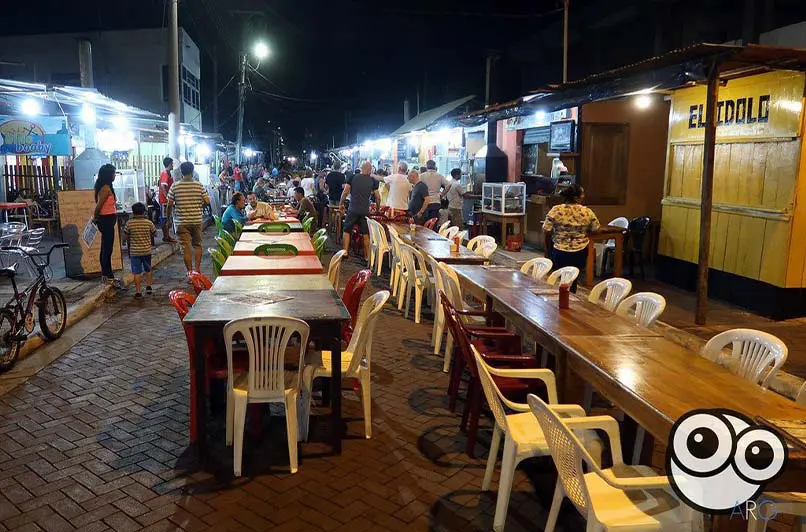
Seafood is the star of Galapagos cooking: fresh fish, ceviche and, in season, lobster, along with Ecuadorian classics like encocado, plantains and fresh tropical juices. In Puerto Ayora, don’t miss the food stalls of Los Kioskos, a street that fills with tables in the evening, where you can choose your fish and have it grilled on the spot. Santa Cruz also has a local craft brewery and cafés that serve coffee grown in the island’s highlands.
Wildlife and Conservation on the Galapagos Islands
About 97% of the land in the Galapagos is protected by the Galapagos National Park. Even on a land-based tour, you’ll see the islands’ famous animals up close: sea lions on the town beaches, marine iguanas on the rocks, blue-footed boobies on North Seymour, giant tortoises in the Santa Cruz highlands and Galapagos penguins around Isabela. Please follow the Galapagos National Park rules, keep your distance from wildlife and always visit protected sites with a licensed guide. For more species, see our Galapagos animals guide.
The Cons of a Galapagos Land-Based Tour
Land-based tours have many advantages, but there are a few trade-offs to keep in mind:
- Travel time between islands: public ferries connect Santa Cruz with Isabela, San Cristóbal and Floreana, and each crossing takes about 2 hours. There are no direct ferries between Isabela and San Cristóbal, so you always pass through Santa Cruz, unless you take a small inter-island plane.
- Daytime boat rides: unlike a cruise, which sails at night, you’ll spend part of some days traveling.
- No access to the remote islands: islands such as Genovesa, Fernandina and the western coast of Isabela can only be reached by cruise.
- Early starts: boat day trips to the uninhabited islands often leave early in the morning and have limited spaces, so book them in advance.
Why Should I Book a Land-Based Tour with GreenGo Travel?
GreenGo Travel is a local Ecuadorian travel company specializing in the Galapagos. When you book a land-based tour with us, our team plans your itinerary around your dates, interests and budget, books your hotels, ferries and day trips, and arranges transfers and guides, so you can focus on enjoying the islands. You can read what past travelers say in our reviews on Tripadvisor.
Explore our Galapagos land-based tours
Galapagos land-based tours – A comprehensive guide Frequently Asked Questions
Yes. On a land-based tour you stay in hotels on Santa Cruz, San Cristóbal, Isabela or Floreana and visit the islands on guided land excursions and boat day trips, including trips to uninhabited islands such as North Seymour, Bartolomé and South Plaza.
It depends on your travel style. Land-based tours offer more flexibility, local culture and nights on solid ground, which makes them ideal for families and travelers who get seasick. Cruises reach remote islands like Genovesa and Fernandina and cover more sites in less time. Many travelers combine both.
Plan at least 5 days to see more than one island. Six to eight days let you visit San Cristóbal, Santa Cruz and Isabela, and 10 to 14 days give you time for extra day trips and free days.
Santa Cruz is the best base for a first trip, with the most hotels and day trips. Isabela is ideal for volcano hikes and a relaxed beach town, San Cristóbal for sea lions and Kicker Rock, and Floreana for a quiet, off-the-beaten-path stay.
Yes. Hotels offer more space and family rooms, schedules are more flexible, and you can choose excursions that suit children’s ages. A private guide can adapt each day to your family.
Yes. You sleep on land every night, and you can choose shorter boat trips. Ferry crossings between islands take about 2 hours, and seas are calmest from January to May.
No. Remote islands such as Genovesa and Fernandina can only be visited on a cruise. Land-based tours reach the inhabited islands and the uninhabited islands within day-trip range of Santa Cruz.
Yes, for most sites. You can explore some beaches and town areas on your own, but visits to protected sites and all boat day trips must be led by licensed Galapagos National Park guides.
Land-based tours run all year. December to May brings warm water, sunshine and calm seas; June to November is cooler, better for hiking and very active marine life, with rougher seas from August to October.